POS case study
Cloud-Based POS Ecosystem
A commerce platform engineered to replace legacy systems with a modern, scalable cloud architecture, built for a confidential enterprise client in retail and restaurants. Work began in September 2020, and all primary objectives were met within the first 12-month deployment phase.
What it does
- Replace legacy systems: migrate from a server-based POS to a flexible cloud architecture
- Real-time visibility: instant sales and inventory reporting across all branches
- Payment agility: several payment processors, for better rates and redundancy
- Secure compliance: EMV Level 3 certification and PCI DSS data security
- White-label ready: an architecture that ISOs and resellers can rebrand
- Customer experience: ordering flows that cut waiting times
Results
What changed
reduction in wait times
Optimised ordering flows and kitchen display integration cut queuing and service times at peak hours.
increase in online orders
The mobile-first customer portal brought immediate adoption for pickup and delivery.
merchant satisfaction
Franchise owners and staff named ease of use and reliability as the main reasons.
PCI DSS compliant
The new architecture passed external security audits and penetration tests with no critical vulnerabilities.
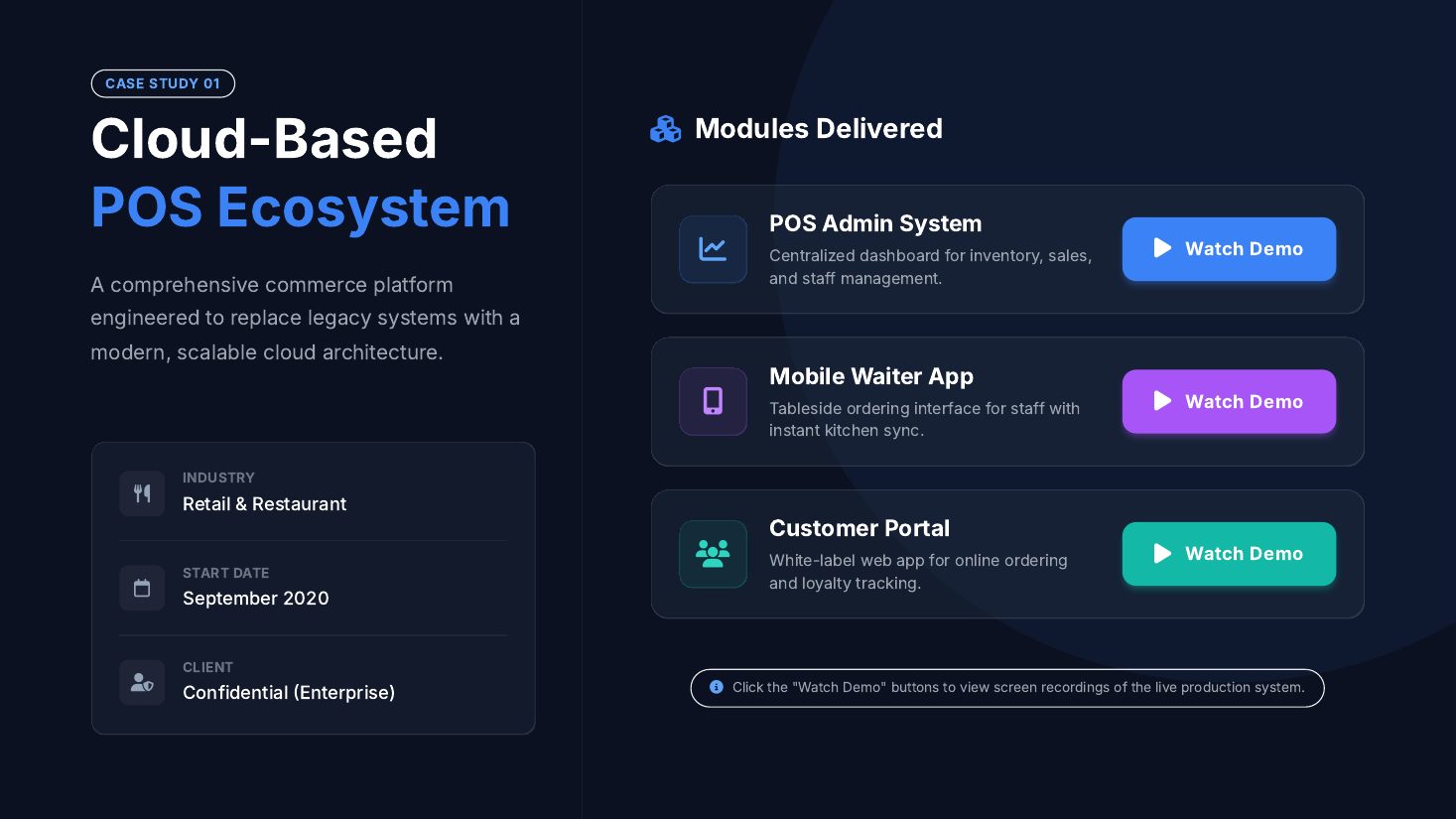
POS admin system
The back-office command centre, built for operational control and real-time visibility.
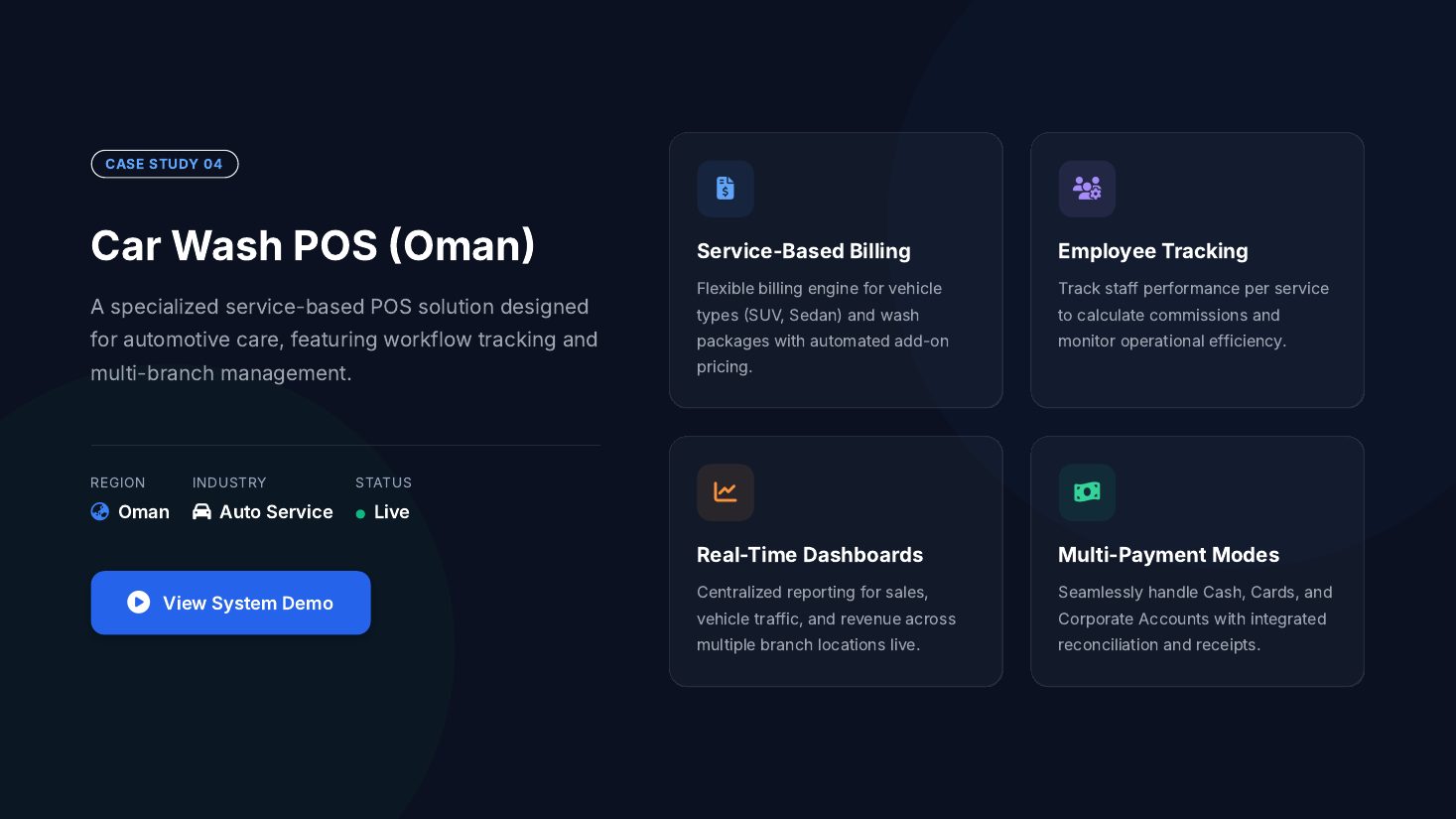
Real-time analytics
Live dashboard for sales, terminal status and end-of-day reconciliation reports.
Multi-location inventory
Central stock management across branches, with low-stock alerts and transfers.
Role-based access
Granular permissions for cashiers, managers and admins.
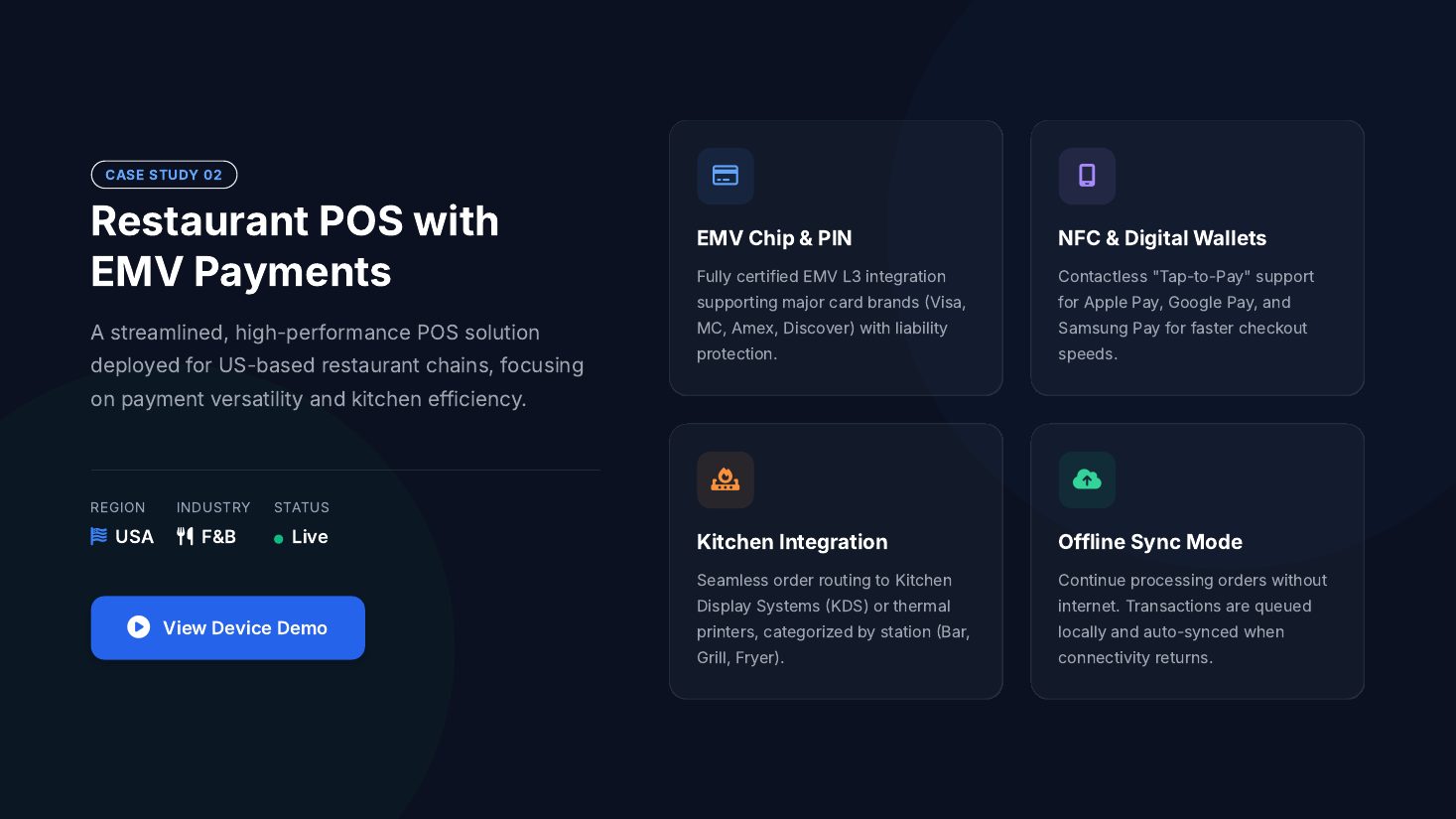
Multi-processor payments
Transactions routed to different processors by card type or region, to optimise fees.
EMV certified processing
Level 3 EMV certification, with liability-shift protection and encrypted transaction flows.
Transaction management
Refunds, voids, tips and complex tax rules handled in a few steps.
Mobile waiter app
A handheld tool for orders, payments and tableside service.
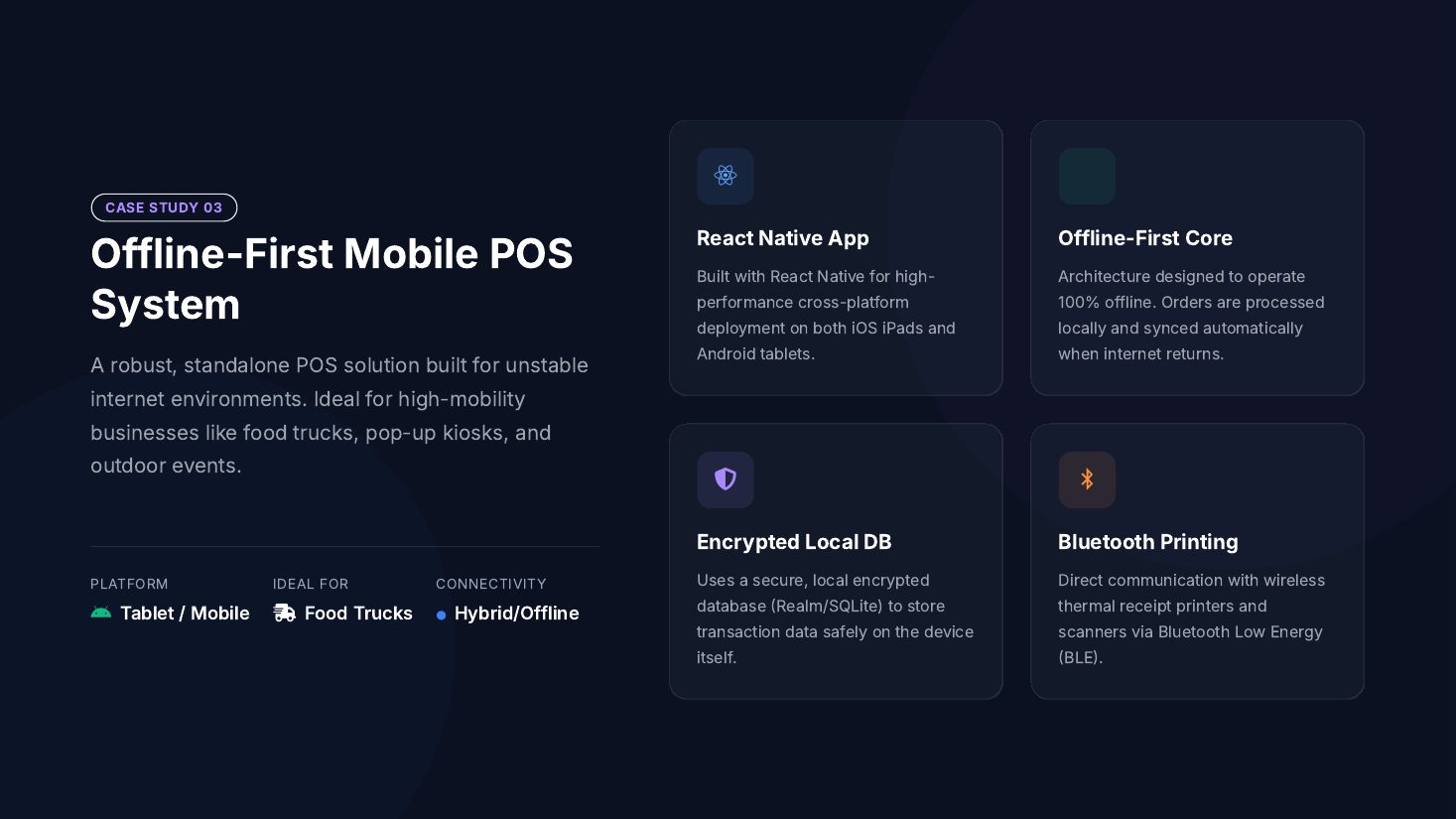
Android and iOS tablets
Native apps for both platforms, so existing hardware keeps working.
Tableside ordering
Orders entered at the table go straight to the kitchen, with no handwriting to misread.
QR self-ordering
Dynamic QR codes let customers view the menu and order for themselves.
Offline queueing
Orders continue through an internet outage and sync when the connection returns.
Split bills and tipping
Checks split by seat or amount, with custom tip percentages on the device.
Smart printer routing
Food goes to the kitchen printer and drinks to the bar, automatically.
Customer portal
A mobile-first experience for customers, on every channel.
Mobile-first PWA
An app-like experience in the browser, with nothing to download.
Omnichannel ordering
Pickup, home delivery and dine-in QR ordering, with live status tracking.
Loyalty and rewards
A points system with tiered rewards, wallet passes and personalised promotions.
Table reservations
Bookings synced with floor management to make the most of seating.
Event ticket bookings
A module for selling tickets to events, workshops and seasonal offers.
Secure PCI payments
Encrypted checkout with saved cards (tokenization), Apple Pay and Google Pay.
Technology and security
Cloud infrastructure
AWS, with a microservices architecture on Docker and Kubernetes.
API layer
Node.js and Go, exposed through GraphQL and REST.
Front ends
React Native apps and a Next.js progressive web app.
Encryption and sign-in
AES-256 encryption at rest and in transit, and OAuth 2.0 authorisation with single sign-on.
Card tokenization
Card numbers are replaced with secure tokens, in line with PCI rules.
Fraud detection
Machine-learning models watch transactions in real time and flag anomalies.
More POS work